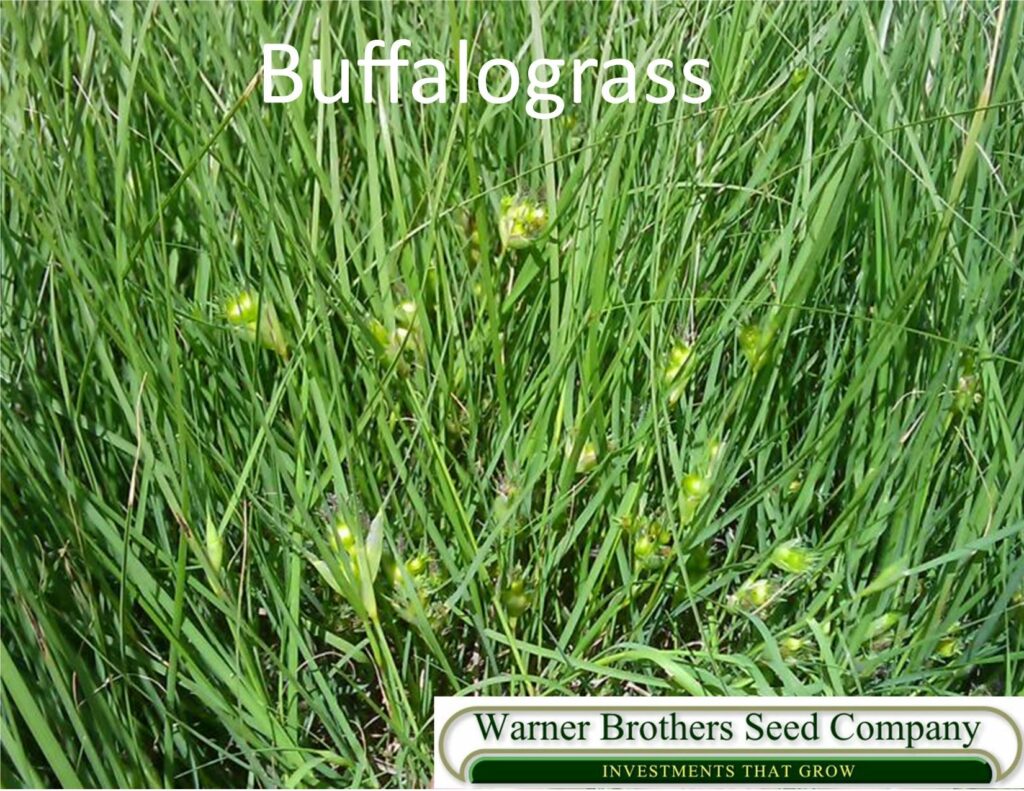
Buffalo Grass
(Buchloe dactyloides)
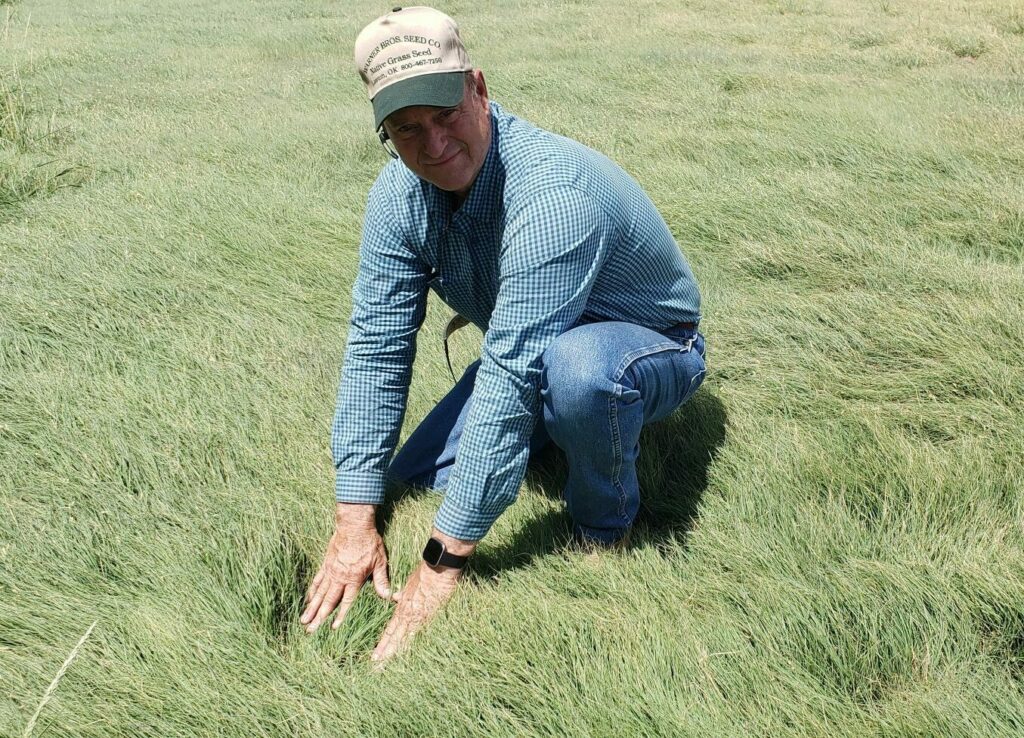
Buffalograss is a fine-leaved, native, sod-forming, warm-season, perennial. It is the dominant species on the short-grass region of the central Great Plains. Generally, it grows 4 to 8 inches high and produces leaves less than 1/8 inch wide and 3 to 6 inches long. It spreads rapidly by surface runners and forms a dense, matted turf (great for lawns).
Growth begins in mid-spring and continues through the summer. Provides good grazing for livestock. Its palatability, prevalence, and adaptation to a wide range of soil and climatic conditions make it an important forage species of the Great Plains.
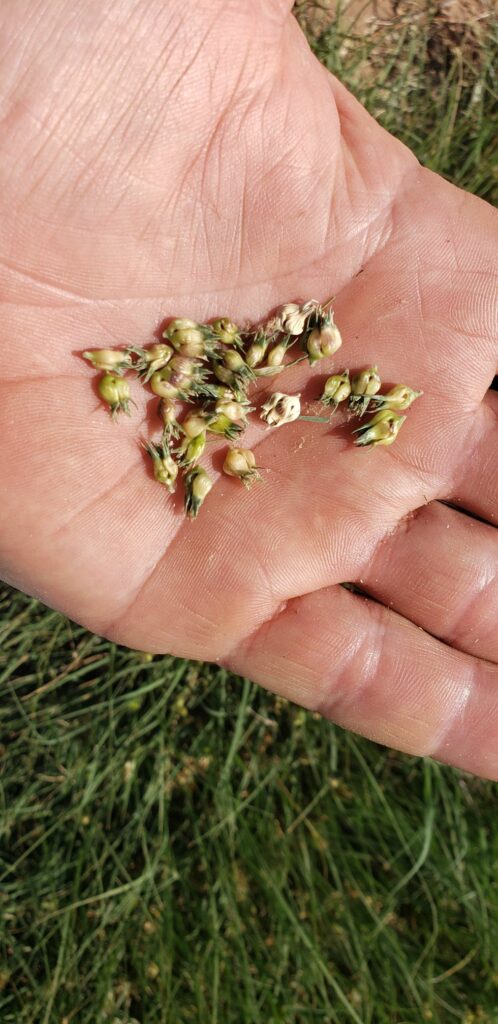
Buffalograss withstands long, heavy grazing better than any other native grass on ranges consistently subjected to severe use. It often survives as a nearly pure stand. Because of its excellent ground cover, ability to spread under use, wide climatic adaptation, and relative ease of establishment, Buffalograss is ideally suited for erosion control on range and pasturelands. The seed of the grass is enclosed in hard burs. One or more seeds are in each bur.
(For Turf use) Buffalograss is a very drought resistant and low maintenance grass requiring little input cost to maintain (less water, fertilizer, and mowing).
General Characteristics
| Growth Type: | Sod Forming |
| Life Span: | Perennial |
| Growing Season: | Warm Season |
| Native/Introduced: | Native |
| Plant Height: | 4-8 inches |
| Cold Tolerance: | Good |
| Drought Tolerance: | Good |
| Salt Tolerance: | Fair |
| Soil Type: | SandyLoam - Clay |
| Minimum Rainfall: | 15 inches |
| Planting Rate: | 12-15 pls# / acre |
| Lawns: | 2-3pls# / 1000 sqft |
| Planting Date: | Dec. - June |
| Seed Type: | Bur |
| Uses: | Grazing Erosion Control Reclamation Lawns Cemeteries Native Landscaping Commercial & Highway Right-aways |
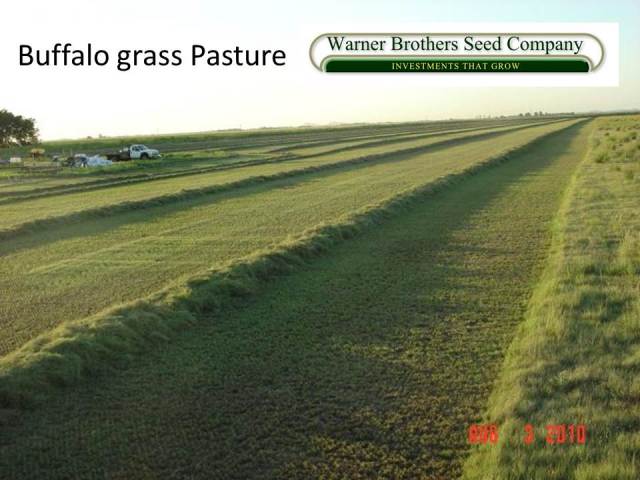
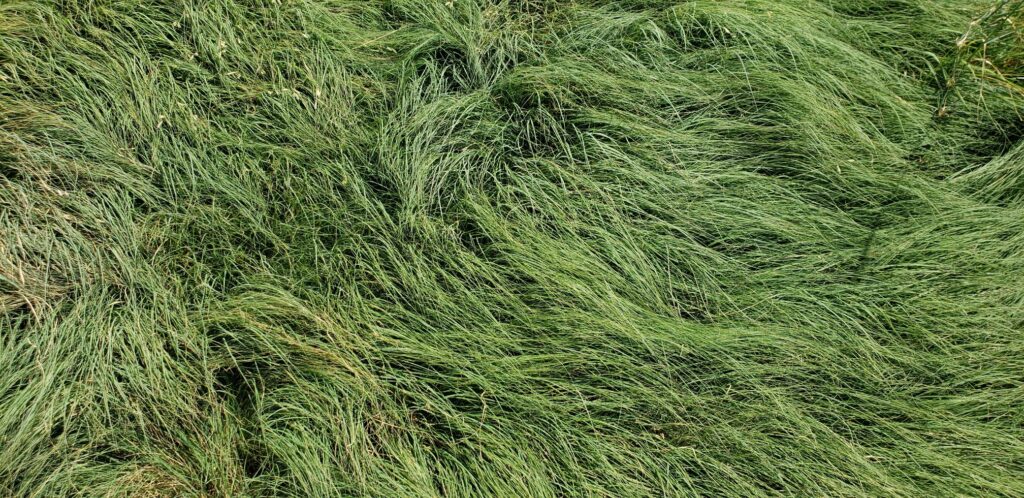
TEXOKA
Texoka is a variety derived from 10 selections of Buffalograss. As the variety name indicates the parents from this variety were selected from Texas, Oklahoma and Kansas buffalograss populations. Texoka is well adapted to most of the United States. It is suited for forage production on rangeland, for erosion control on critical areas and for turf in lawns and recreational areas. Buffalograss is a low maintenance grass, excellent for lawns, roadside right-of-ways, parks, golf courses, landfills and reclamation areas.
Fact Sheet
Buffalograss (Texoka)
(Buchloe dactyloides)
Buffalograss is native warm-season, sod-forming, short grass of the Great Plains. It spreads by surface runners or stolons. It is commonly found on medium to fine textured soils. As it reaches its western and southern limits of adaptation, it is usually found in low, marshy areas and depressions. It has been widely planted in the Great Plains area with very good results. Buffalograss could be considered a special purpose grass for seeding waterways and depleted clay upland sites where erosion control is paramount.
The seed is commonly sold in the form of burs. It is easily handled and drilled. It should be planted when soil temperatures are high enough to insure germination and establishment.
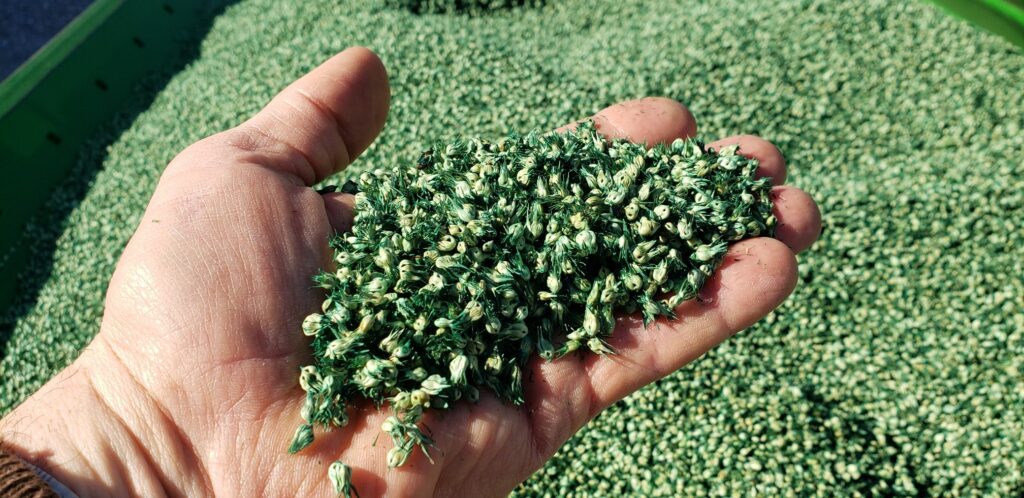
Buffalograss has been used for years as a lawn grass around many ranch houses and homesteads where it was part of the native vegetation. The areas where it was used on the uplands on drier parts of the central Great Plains and southern High Plains, locally know as the “short-grass country”. However, it is only in recent years that Buffalograss has gotten the attention it deserves as a lawn grass for use in the cities and urban areas. The main advantages for lawn and certain recreational area usage are: it has low maintenance requirements, needs little or no fertilizer, requires infrequent mowing, has low water requirements, and is relatively free of diseases and insect damage. Buffalograss is dormant after the first few frosts in the fall, but still presents a pleasing aspect with its tan to reddish-tan fall and winter color.
SEEDING RATE:
LAWN
1 to 3 lbs. PLS/1000 sq. ft.
NUMBER OF SEEDS:
40,000 burs per lb. (0.46 kg)
275,000 seeds per lb. (0.46 kg)
VARIETIES:
TEXOKA:
The Oklahoma Agricultural Experiment Station in cooperation with the Kansas and Texas Agricultural Experiment Stations and the USDA Agricultural Research Service and Soil Conservation Service released Texoka Buffalograss in 1974. Texoka is a synthetic variety derived from 10 selected clones. As the variety name indicates, the parents from these clones were selected from Texas, Oklahoma and Kansas buffalograss populations
Texoka Buffalo Grass Seed Price $28.00 per pure live seed pound
Germination rate usually ranges between 85 to 95 percent.
Establishment and Care of Buffalograss Lawns
Buffalograss (Buchloë dactyloides) is the only grass native to North America that is used widely for turf. It was the principal forage grass for the American bison, hence the name. Buffalograss is well adapted to the drylands of the western prairies and plains, and in recent years new varieties have been developed to extend its natural area of adaptation.
Buffalograss is a warm-season grass that spreads by aboveground stems called stolons. Reproduction is dioecious — female and male flowers are located on separate plants. Seedheads on male plants are located high in the turfgrass canopy, while female seedheads are found near the base of the plant. Because male flowers extend above the canopy in unmowed turf, selecting a cultivar with both male and female plants can be an aesthetic consideration. The female burrs, or protective shells, each containing one or more seeds, are difficult to harvest because of their location deep in the turfgrass canopy.
Buffalograss adapts best to full sun, but acceptable turf can be grown with 6 to 8 hours per day of direct sunlight. It is one of the most heat and drought tolerant of turfgrass species. During extended dry periods without moisture, buffalograss goes dormant to avoid drought stress and will remain dormant until moisture is available. Buffalograss has better cold tolerance than other warm-season turfgrasses, but the degree of cold tolerance varies among cultivars.
Establishment
Buffalograss may be seeded or it may be vegetatively established using either sod or plugs or both, depending on the cultivar. Seeded cultivars will have both male and female flowers, while sodded types are predominantly female.
The best time to plant is late spring or early summer, although sod and plugs may be planted as late as August or early September, assuming that the weather remains warm enough for a root system to develop before winter. Success with a late-summer planting also depends on cold hardiness of individual cultivars.
Seeding
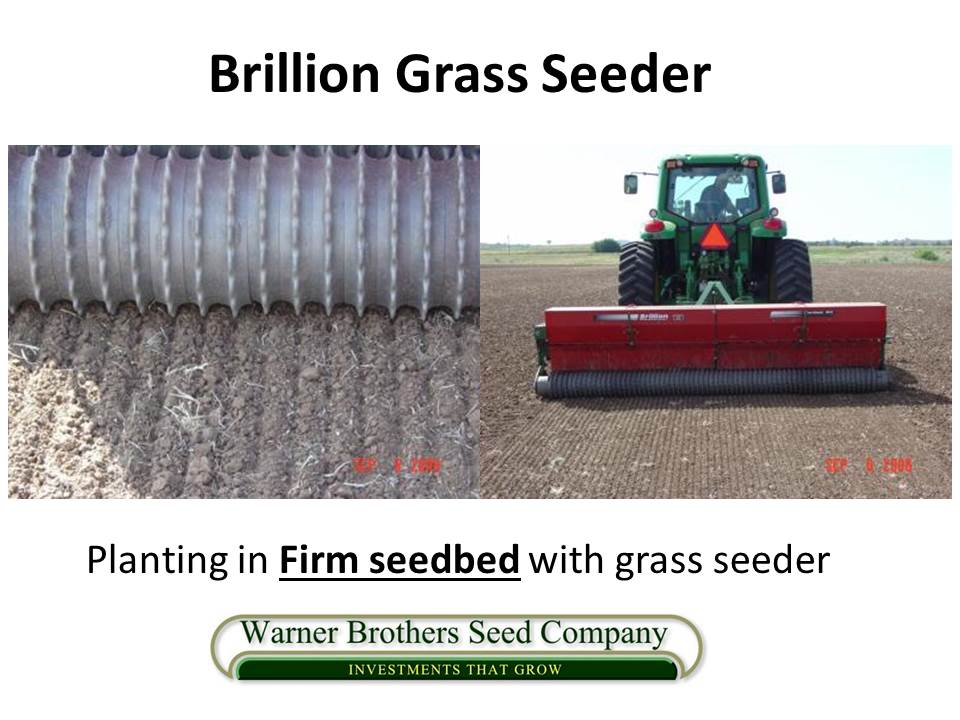
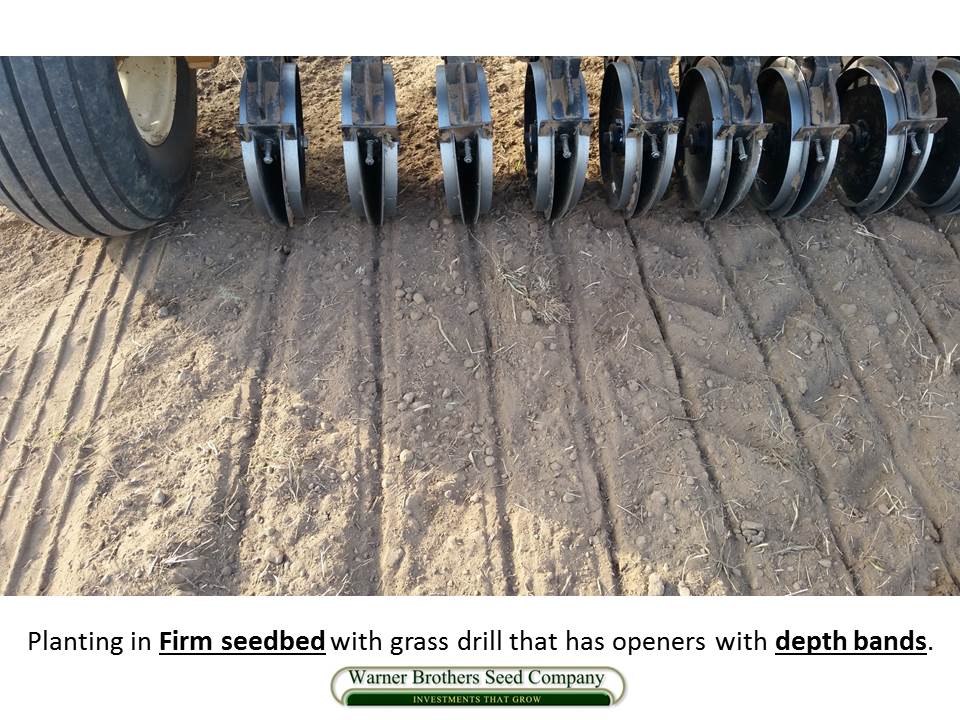
Buffalograss seed burs should be planted at a rate of 1 to 3 pounds per 1,000 square feet. Seeding at the higher recommended rate should provide complete lawn coverage in one season. Seed burrs should be planted at a depth of 1/2 inch or less. Grooves can be made in the soil to receive seed using a Brillion grass seeder that makes grooves in the soil and then deposits seed during one operation. Burrs may also be broadcast on the prepared seedbed using a box (drop) fertilizer spreader. Gently rake broadcast burrs into the soil surface and then roll to ensure good burr-to-soil contact.
After seeding, straw or other mulch may be applied at a rate of one bale per 1,000 square feet. Lightly water the seedbed daily when there is no rain. As seedlings emerge and develop, irrigate less frequently but often enough to prevent drought stress. Mow seedlings at a height of 2 to 3 inches when the new seedlings have reached a height of 3 inches. Try to remove no more than one-third of the vertical growth at each mowing. About six weeks after seeding, apply a slow release nitrogen fertilizer at a rate of 1 pound nitrogen per 1,000 square feet.
Patience and perseverance are often the key to establishing a buffalograss lawn. Buffalograss does not germinate as a dense stand like tall fescue. One seedling per square foot is adequate because buffalograss becomes progressively thicker each year as the stolons spread. During the first and second years, persistent attention to weed control may be required. Weeds may be removed by hand or by spot spraying with Roundup.
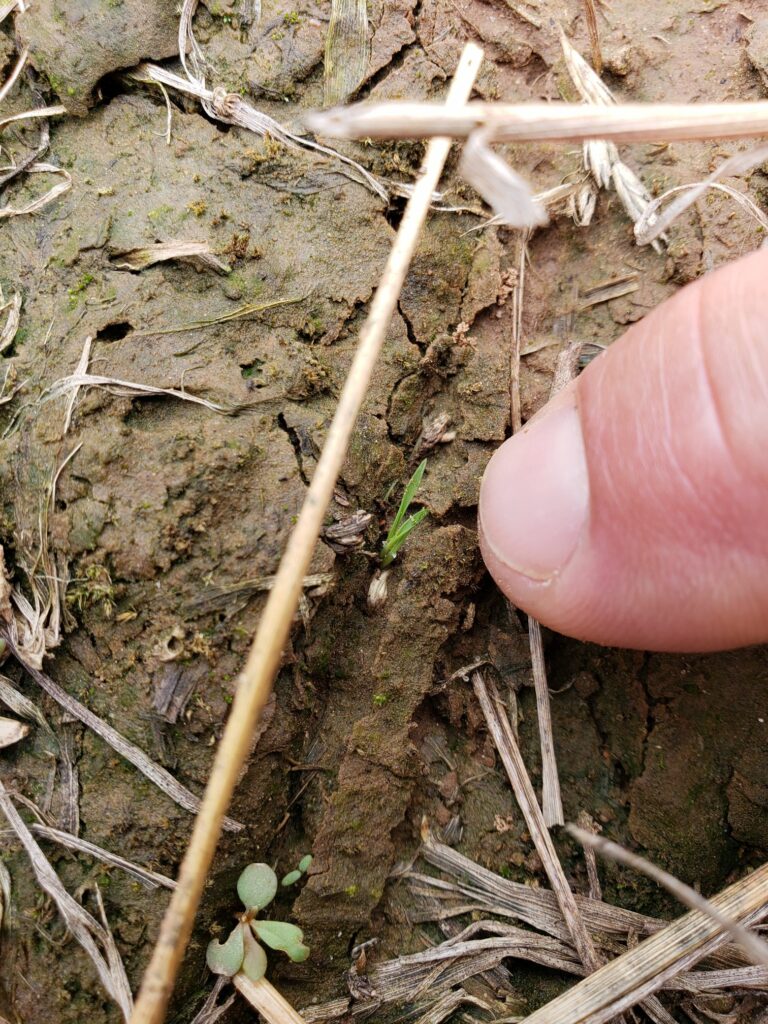
Keys to weed control in Buffalograss
Avoid frequent irrigation. Water only as needed to maintain desired buffalograss quality.
Avoid overfertilization with nitrogen.
For chemical weed control, use only products labeled for buffalograss
Control crabgrass with annual applications of approved preemergence chemicals.
Do not use 2,4-D on buffalograss during the first year of establishment or when temperature exceeds 80 degrees Fahrenheit. Fall applications are preferred for control of broadleaf weeds in buffalograss.
Managing established Buffalograss
Buffalograss is a low maintenance grass and will fail if over managed. Established buffalograss requires only 1 or 2 pounds of nitrogen per 1,000 square feet per year. Select a fertilizer with a nitrogen-to-phosphorus-to-potassium ratio of 3-1-2 or 4-1-2 and at least 35 percent slow-release nitrogen. Apply fertilizer at a rate of 1 pound nitrogen per 1,000 square feet in June and repeat the application in late July or early August.
Irrigate buffalograss only enough to maintain growth and prevent dormancy, if desired. Buffalograss will survive extended drought but will lose color as it enters dormancy. Overwatering will promote weed competition and may increase the incidence of disease.
There are several options for mowing buffalograss. Where moderate to high quality turf is desired, mow once per week at a height of 2 to 3 inches. For low-maintenance areas mow at 3 to 4 inches every three to four weeks. Buffalograss may also be left unmowed except for an annual spring mowing at 3 to 4 inches to remove old growth.
Annual weeds may be controlled with spring applications of pre-emergence herbicides labeled for use on buffalograss such as Dacthal, Dimension, Ronstar G and Surflan. Other preemergence herbicides may give equally effective annual weed control. Broadleaf weeds, including dandelions and plaintains, may be controlled with any of several products that contain 2,4-D and are labeled for buffalograss. For control of winter annual weeds and invasive cool-season grasses like Kentucky bluegrass, spray Roundup on dormant buffalograss in winter before greenup begins.